I used to think that wanting a better lip shape automatically meant wanting bigger lips.
But after scrolling through enough before-and-after photos, I realised that was not really what I was looking for. I did not want a dramatic pout or a completely different face. I just wanted to know whether a slightly more visible upper lip would make my smile look more balanced.
That is how I ended up looking into a lip flip.
Like a lot of people, I had seen the phrase everywhere online, usually next to polished clinic photos or celebrity beauty discussions. The images looked great, but they did not answer the question I actually had: Would this look natural on me?
Before getting too caught up in treatments, consultations, or inspiration boards, I decided to do something simpler. I tested the idea on a clear selfie first.
This is what I learned from comparing a subtle lip flip-style edit with a fuller lip look—and why I think a quick preview can be a genuinely useful first step for anyone who is curious but not ready to commit.
The Part Most Before-and-After Photos Leave Out
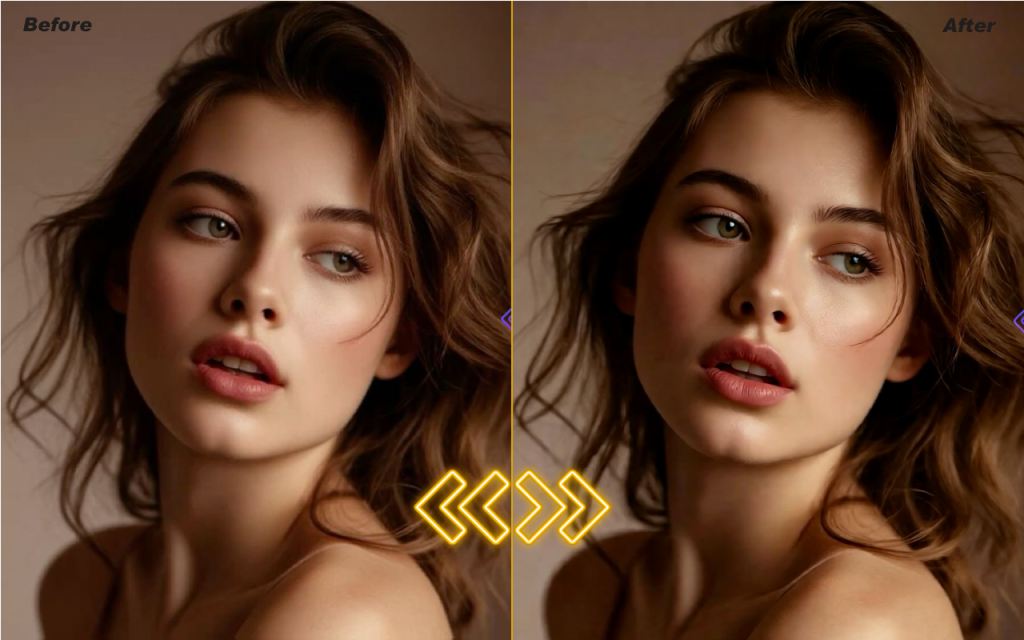
There is nothing wrong with looking at other people’s results for inspiration. In fact, it can be helpful when you are trying to understand different lip shapes or styles.
The problem is that someone else’s result does not automatically translate to your face.
A lip shape that looks beautifully balanced on one person can feel too bold, too soft, or simply unfamiliar on someone else. The distance between the nose and upper lip, the curve of the cupid’s bow, the way you smile, and even the shape of your chin all change the overall effect.
That is why I stopped asking, “Do I want lips like that?” and started asking a better question:
Do I want my own lips to look slightly different—and if so, how?
For me, the answer was not “much bigger.” I wanted a little more upper-lip visibility and a softer shape when I smiled. Seeing that difference on my own photo made the decision feel much less abstract.
What Is a Lip Flip, Exactly?
The simplest way to think about it is this: a lip flip is often associated with a subtle change in how the upper lip sits and appears, rather than a major increase in lip size.
That distinction matters because many people use the words “lip flip” and “lip filler” interchangeably, even though they are often discussed for different aesthetic goals.
A lip flip-style result tends to appeal to people who want something understated. Maybe your upper lip seems to disappear when you smile. Maybe you like the idea of showing a bit more of the natural lip line. Or maybe you simply want a softer, slightly more lifted-looking upper lip without going for obvious volume.
It is a small difference on paper, but visually it can feel quite different.
Lip Flip vs Lip Filler: What I Noticed in a Preview
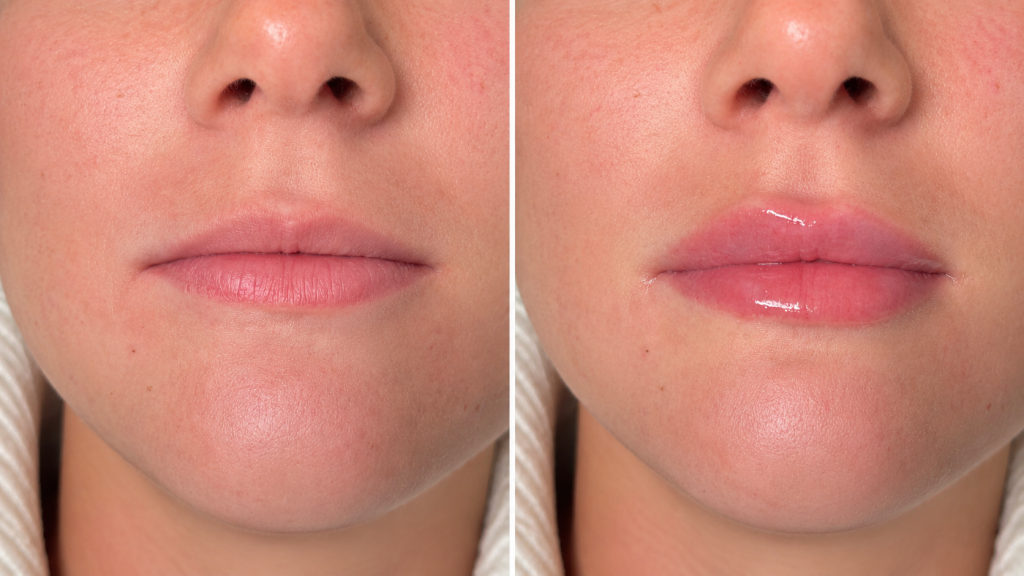
When I compared the two looks, the most surprising thing was how quickly I could tell which direction felt closer to my style.
The lip flip-style preview looked more like a refinement. My upper lip seemed a little more present, but the rest of my face still looked completely familiar. It was the kind of change that made me think, “That could just be a really good makeup day.”
A fuller lip edit had a different effect. It added more visual weight to the mouth and made the lip border stand out more. It was not necessarily too much—it was just a different look.
Here is the easiest way I would describe the difference:
| If your main goal is… | You may be drawn to… |
|---|---|
| Seeing a little more of your upper lip | A subtle lip flip-style look |
| Adding noticeable fullness | A lip filler-style look |
| Making the lip border more defined | A fuller, more sculpted edit |
| Keeping the change very low-key | A gentle upper-lip adjustment |
| Testing several possibilities before researching further | An AI preview first |
There is no “better” option here. It really comes down to what feels most like you.
For me, the lighter edit made more sense because I liked the way it softened my smile without changing my face too much. Someone else might prefer the added volume of a filler-inspired look—and that is exactly why trying both visually can be helpful.
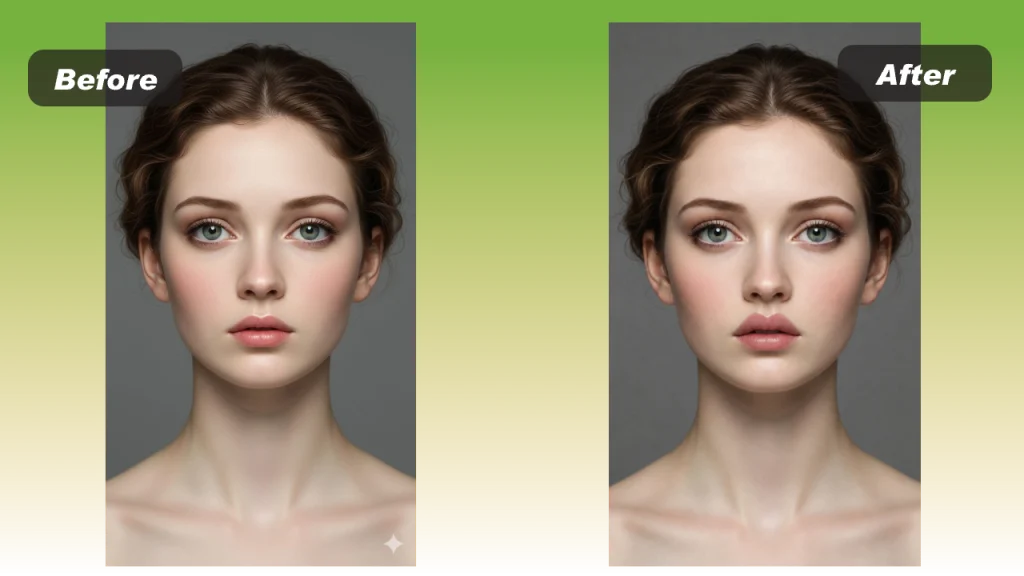
Why I Think an AI Preview Is Worth Trying First
I am not saying an edited image can tell you what any cosmetic treatment will look like in real life. It cannot predict healing, individual results, or what a qualified provider may recommend.
But it can help with something important: getting clear about your own taste.
Using an AI lip flip preview gave me a much more useful starting point than endlessly saving random photos on Pinterest. Instead of collecting examples of other people, I could compare a few possible directions on my own face.
The process was quick:
- I chose a front-facing photo with normal lighting.
- I made sure my lips were visible and I was not wearing a heavy beauty filter.
- I generated a subtle edit first.
- I compared it with a fuller version.
- I looked at both images next to the original rather than judging them separately.
That last part made a big difference.
When you only look at the edited image, it is easy to get used to the change very quickly. Putting it beside the original lets you see whether the adjustment really improves the balance of your face—or whether it simply feels new.
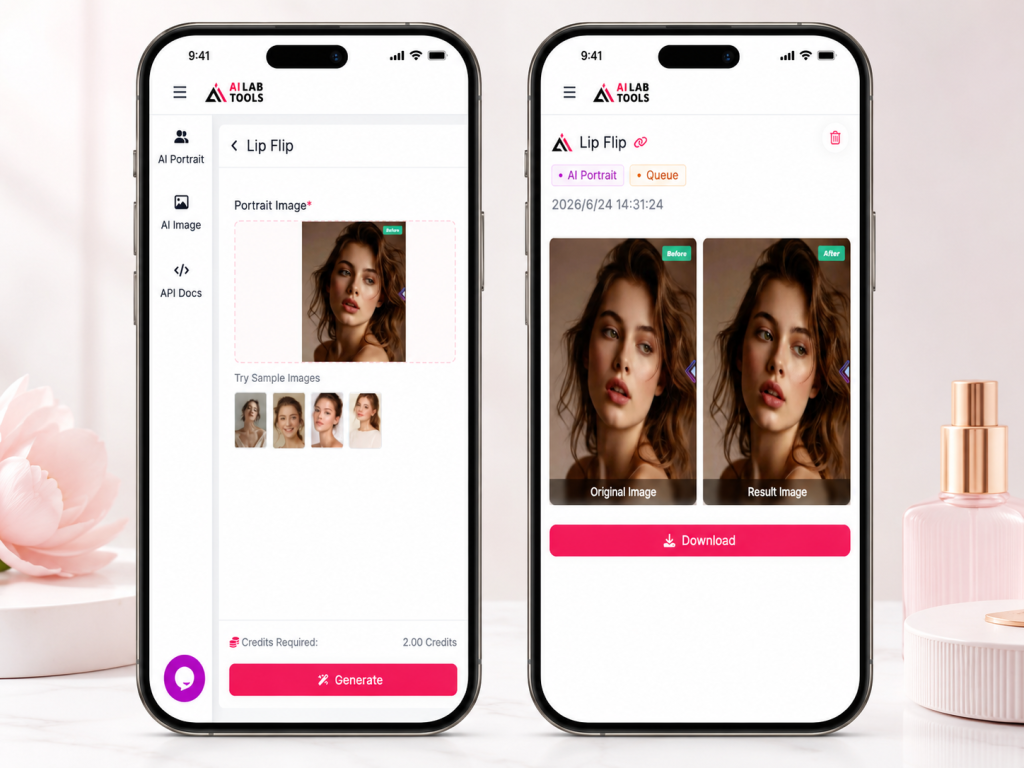
The Best Way to Judge Your Own Preview
My first instinct was to zoom in on my mouth. But after a few minutes, I realised that was not the most useful way to judge the result.
Instead, I looked at the whole face.
Here are a few questions that helped me:
Does the change still look like me?
This was the biggest one. I wanted an improvement, not a new identity. The best preview was the one that made me look a little more polished while still feeling recognisable.
Does my upper lip look more balanced when I smile?
For some people, the upper lip is the feature they notice most in photos. A small visual adjustment may be enough to make a smile feel more open or harmonious.
Is the cupid’s bow still natural?
I like lips with character. A preview should not erase the little details that make your face yours. If the shape starts to look too sharp, too symmetrical, or too “template-like,” that is a useful signal.
Does the edit work beyond a close-up?
I zoomed out and looked at my cheeks, nose, chin, and jawline. A lip shape can look lovely in a cropped image but feel disconnected from the rest of the face.
Would I still like it on an ordinary day?
This is an underrated question. Beauty inspiration often comes from studio lighting, full makeup, and perfectly posed expressions. I wanted to know whether the change would still feel right with bare skin, casual hair, and a normal smile.
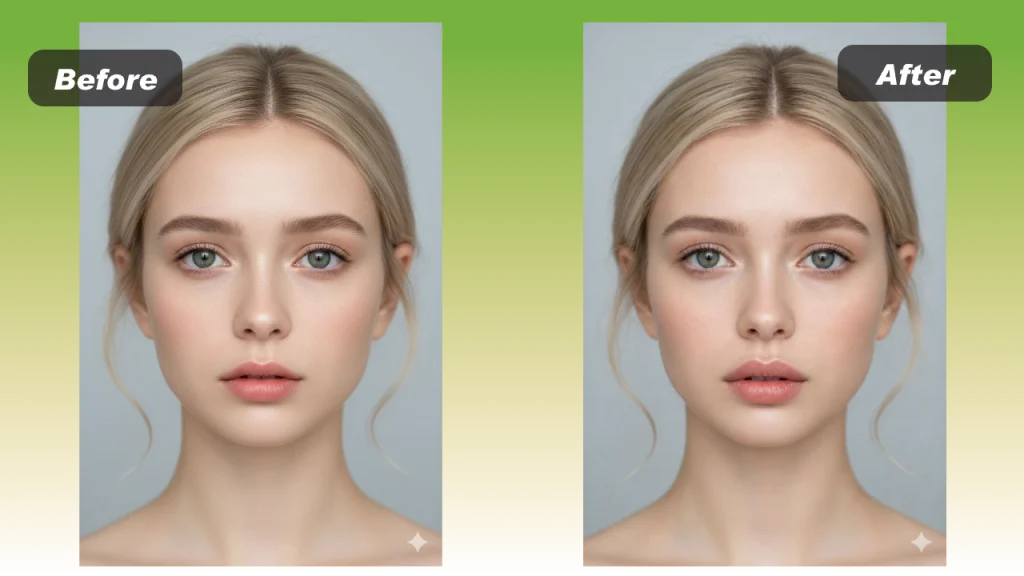
A Better Way to Prepare for a Consultation
Even if you are only curious right now, saving a preview you like can be useful later.
It gives you a clearer way to describe your preferences. Instead of saying, “I want fuller lips,” you may be able to say:
- “I like how my upper lip looks a little more visible here.”
- “I prefer a subtle change rather than obvious volume.”
- “I like this softer outline, but I do not want to lose my natural shape.”
- “This is the kind of balance I am hoping for.”
That is much more specific—and much easier for another person to understand.
I also think it helps reduce the pressure to decide immediately. You can try an AILabTools Lip Flip preview, save the version you prefer, come back to it a few days later, and see whether you still feel the same.
Sometimes the best beauty decision is simply giving yourself space to think.
A Note on Upper Lip Lift Conversations
While researching lip changes, you may also come across the term “upper lip lift.” It is worth knowing that this is a different conversation from a simple visual preview or a subtle cosmetic tweak.
An upper lip lift is generally discussed in relation to structural facial proportions, particularly the space between the nose and upper lip. It is not just a stronger version of a lip flip or a way to add more fullness.
That is why I would keep these ideas separate in your mind:
- A subtle upper-lip visual change
- A fuller lip shape
- A structural facial procedure
They may all be discussed in the same beauty space, but they are not interchangeable.
Final Thoughts: Start With Curiosity, Not Pressure
Trying a new beauty look can be exciting, but it can also get overwhelming fast. There are endless before-and-after photos, strong opinions online, and plenty of pressure to follow whatever is trending.
For me, testing the look on my own photo made the process feel quieter and more personal.
I did not need to decide whether I wanted anything done. I only needed to answer a small question: Would I feel more confident with a slightly more visible upper lip?
That is what a good preview can do. It gives you a chance to explore, compare, and understand your own preferences before you make a bigger decision.
The goal is not to chase someone else’s lips. It is to see what a subtle change might look like on your own face—and decide whether it still feels like you.
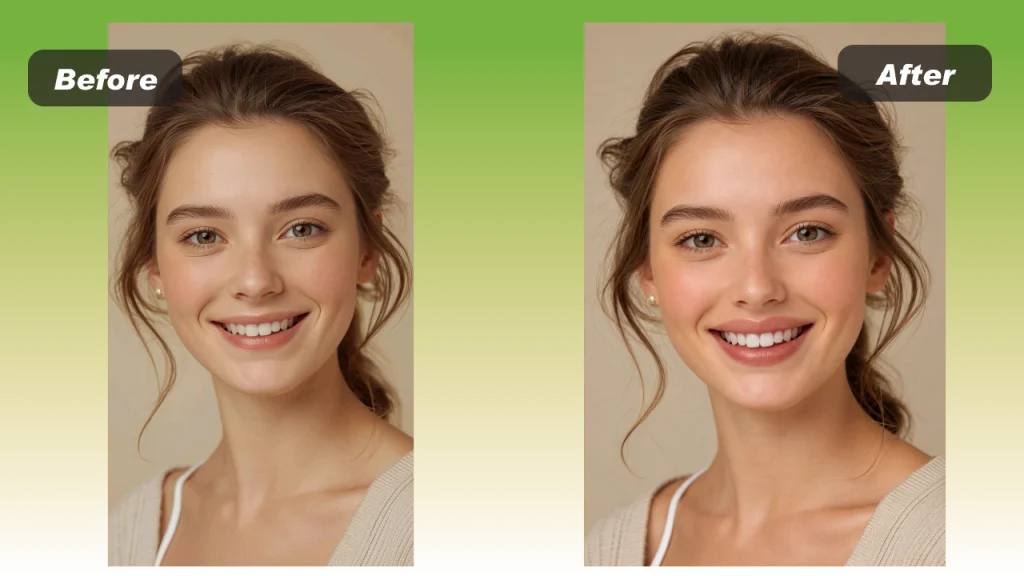
Disclaimer: This article is for general beauty inspiration only. AI-generated previews are not medical advice, do not predict treatment results, and should not replace a consultation with a qualified medical professional.